What Does Hail Damage Actually Look Like on a Roof and Siding?
4/24/2026 Written by: CV Exteriors
After a storm, many homeowners walk outside, look up at their roof or glance at their siding, and think:
“Everything looks fine.”
But hail damage isn’t always obvious.
In fact, most legitimate storm damage is subtle, inconsistent, and easy to miss without a trained eye. Understanding what it actually looks like can help you decide whether it’s worth taking a closer look.
First: What Hail Damage Isn’t
Before getting into what to look for, it helps to know what hail damage does not typically look like.
It’s usually not:
- Large holes in your roof
- Entire sections missing
- Perfectly patterned marks across every surface
Â
Most real hail damage is:
- scattered
- inconsistent
- only visible up close
What Hail Damage Looks Like on a Roof
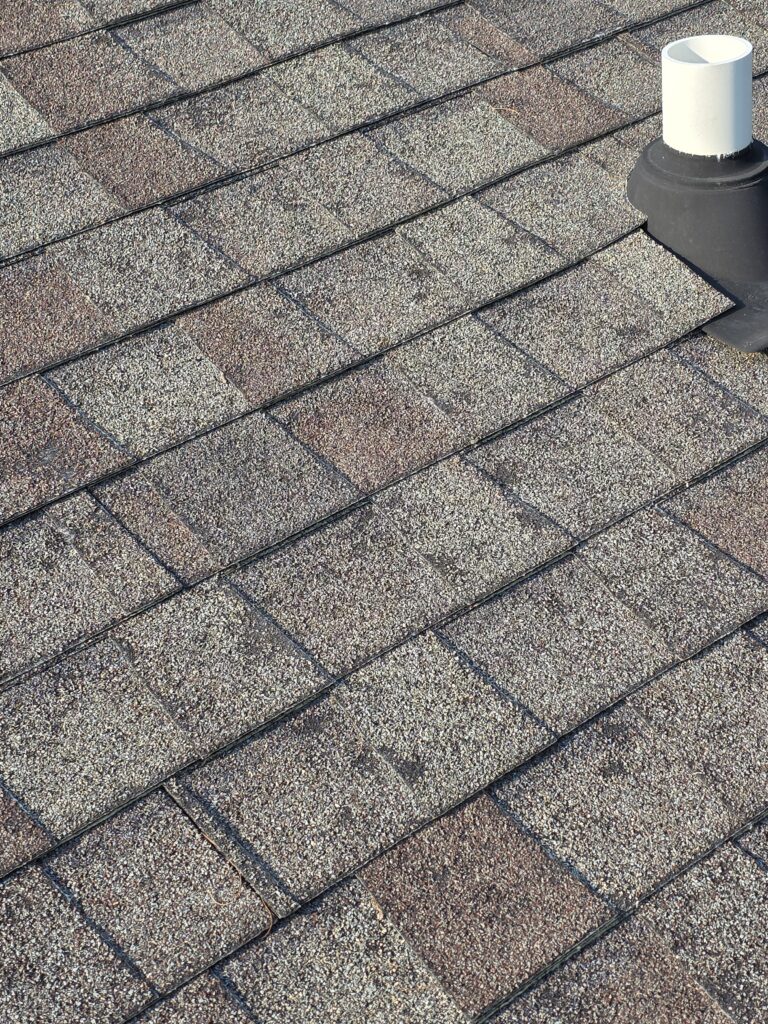
Asphalt shingles are designed to take a beating—but hail can still cause damage that affects their lifespan.
What Hail Damage Looks Like on a Roof
Asphalt shingles are designed to take a beating—but hail can still cause damage that affects their lifespan.
What Hail Damage Looks Like on a Roof
Asphalt shingles are designed to take a beating—but hail can still cause damage that affects their lifespan.
Common Signs on Shingles
1. Granule Loss
This is the most common indicator.
- Small, dark spots where protective granules are missing
- Often circular or slightly irregular
- Exposes the asphalt layer beneath
These spots may not stand out from the ground—but they matter.
Â
2. Soft Impact Marks (Bruising)
Hail can create areas where the shingle surface feels:
- Slightly soft
- Compressed
- Different in texture
These aren’t always visible—they’re often felt during an inspection.
3. Random Distribution
Real hail damage doesn’t follow a pattern.
You’ll typically see:
- Impacts scattered across different slopes
- More concentration on one side of the roof (based on storm direction)
- Variation in size and spacing
Â
4. Damage Around Roof Features
Pay close attention to:
- Vents
- Flashing
- Pipe boots
- Ridge caps
These areas often show clearer signs of impact.
What Hail Damage Looks Like on Siding
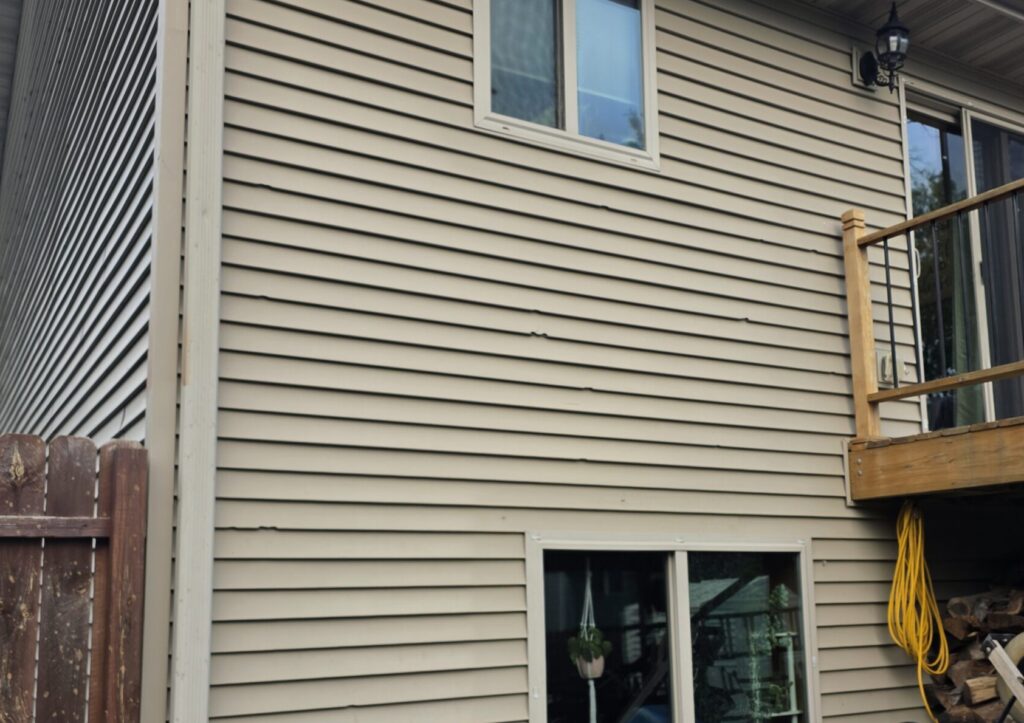
Siding damage can be easier to spot—but still often overlooked.
What Hail Damage Looks Like on Siding
Siding damage can be easier to spot—but still often overlooked.
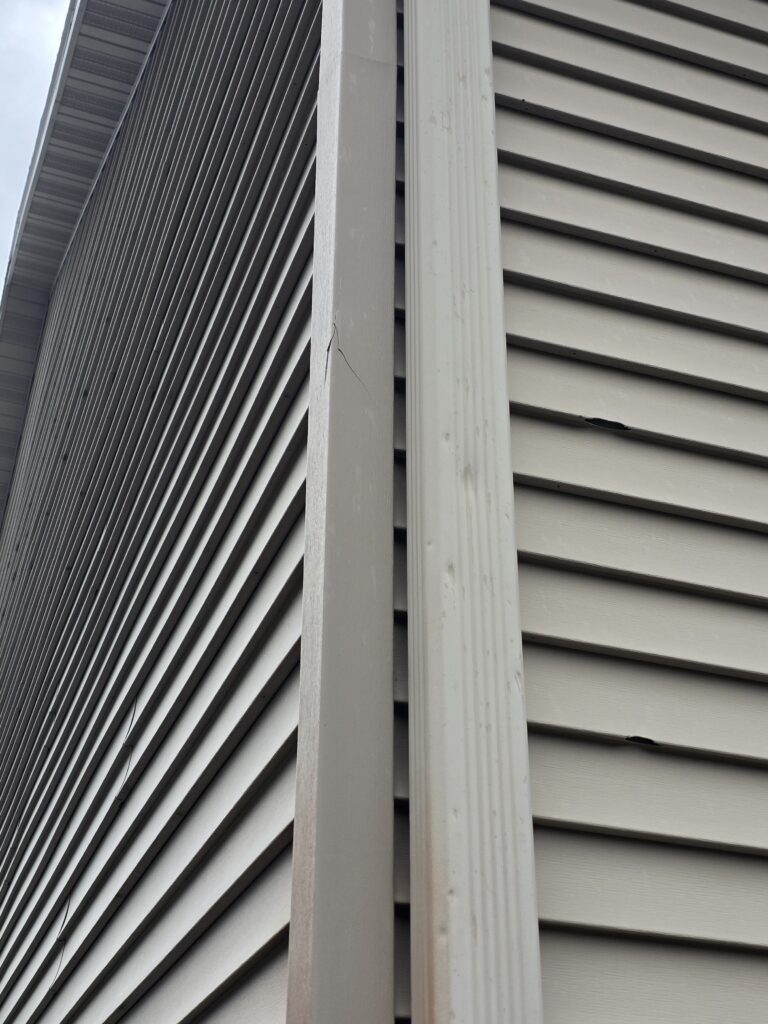
Common Signs on Vinyl or Engineered Siding
1. Small Dents or Dimples
- Shallow indentations in the panel surface
- Often only visible when light hits at an angle
- Scattered, not uniform
2. Minor Cracking or Stress Marks
- Small fractures near panel edges or seams
- Slight surface stress where impact occurred
3. Directional Damage
Similar to the roof, siding damage often appears:
- More heavily on one side of the home
- In areas more exposed to the storm
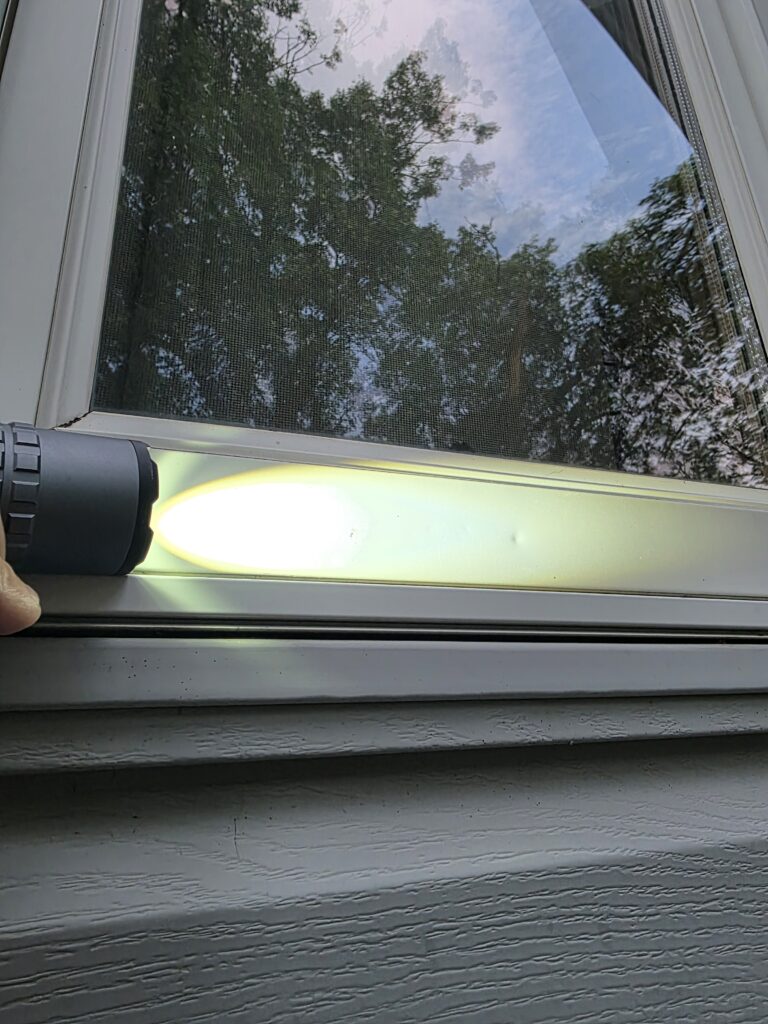
Don’t Forget the “Soft Metals”
Some of the easiest places to spot hail damage are:
- Gutters
- Downspouts
- Window wraps
- Metal vents
Look for:
- Small dents or dimpling
- Uneven surface reflections
These areas often help confirm that hail impacted your home—even if roof damage is harder to see.
Don’t Forget the “Soft Metals”
Some of the easiest places to spot hail damage are:
- Gutters
- Downspouts
- Window wraps
- Metal vents
Look for:
- Small dents or dimpling
- Uneven surface reflections
These areas often help confirm that hail impacted your home—even if roof damage is harder to see.
Don’t Forget the “Soft Metals”
Some of the easiest places to spot hail damage are:
- Gutters
- Downspouts
- Window wraps
- Metal vents
Look for:
- Small dents or dimpling
- Uneven surface reflections
These areas often help confirm that hail impacted your home—even if roof damage is harder to see.
Why Most Homeowners Miss It
There’s a reason hail damage goes unnoticed.
From the ground:
- You can’t see granule loss clearly
- You can’t feel bruising
- Lighting hides small imperfections
Â
What looks “fine” from below can still be legitimate storm damage.
Why It Matters
Even subtle damage can:
- Shorten the lifespan of your roof
- Lead to leaks over time
- Affect how your home is protected
Â
And if it’s storm-related, it may be covered by insurance—but only if it’s identified and documented properly.
What Should You Do If You Suspect Damage?
The safest next step is simple:
Have it professionally inspected
A proper inspection includes:
- Close-up evaluation of shingles and siding
- Identification of impact areas
- Photo documentation
- Clear explanation of findings
Â
From there, you can decide what makes sense—whether that’s filing a claim or monitoring the condition.
The Bottom Line
Hail damage isn’t always obvious—but that doesn’t mean it’s not there.
The key is knowing what to look for:
- Small, scattered impact marks
- Subtle granule loss
- Minor dents in siding and metals
If something doesn’t look quite right—or if your area recently saw hail—it’s worth taking a closer look.
The Bottom Line
Hail damage isn’t always obvious—but that doesn’t mean it’s not there.
The key is knowing what to look for:
- Small, scattered impact marks
- Subtle granule loss
- Minor dents in siding and metals
If something doesn’t look quite right—or if your area recently saw hail—it’s worth taking a closer look.
Need a Second Opinion?
At CV Exteriors, we help homeowners understand what they’re actually seeing.
We provide:
- Detailed inspections
- Clear, honest feedback
- Documentation you can rely on
No pressure. Just clear answers.
Schedule your free inspection today